
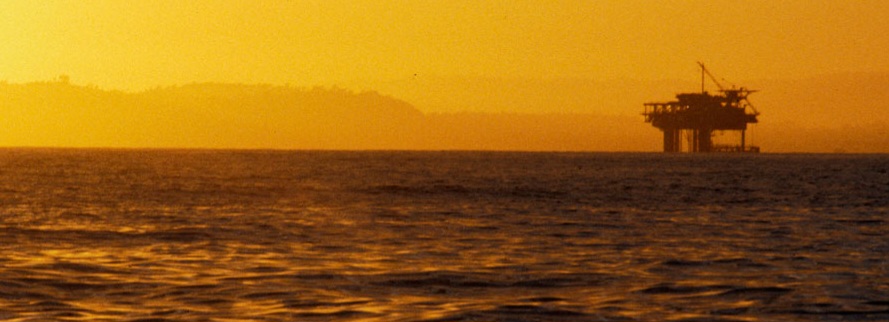
Unlocking Opportunity Beneath the Surface
The Blue Economy promotes the sustainable use of ocean resources and maritime industries to support economic growth, environmental stewardship, and human well-being. It includes sectors such as offshore energy, aquaculture, marine conservation, ocean research, shipping, tourism, coastal resilience, and emerging ocean technologies.
Built at the Intersection of Ocean Innovation
Tiabzu represents the convergence of decades of innovation in ocean science, offshore infrastructure, marine conservation, water technology, subsea operations, and environmental stewardship.
Long before Tiabzu, members of its team helped pioneer initiatives in:
- Aquaculture
- Co-Founder Bob Evans photo-documented the earliest alternative-use projects beneath offshore platforms, including abalone fishery initiatives beneath Chevron’s Platform Hilda and Atlantic Richfield’s Platform Holly. He also established the feasibility of harvesting California mussels for human consumption from offshore platforms, work that contributed to the development of a commercial offshore mussel fishery that continued for decades.
- Global climate policy
- Tiabzu Team Member Tim Foresman, PhD, helped advance global climate policy during his tenure as Chief Scientist for the United Nations Environment Programme.
- Marine sanctuary initiatives
- Co-Founder Bob Evans provided the imagery used by the National Park Service, The Nature Conservancy, and Ventura County to support the establishment of Channel Islands National Park.
- Ocean observatories
- As La Mer Bleu Productions, Co-Founder Bob Evans and Andy McMullen installed an ocean observatory on the west end of Santa Cruz Island. They conducted a three-year Exxon-supported study documenting ecosystem development around Platform Hondo.
- Ocean Thermal Energy Conversion (OTEC)
- Tiabzu Team Member Tim Foresman, PhD, supported Hawaii’s pioneering Ocean Thermal Energy Conversion (OTEC) program while serving with the U.S. Naval Engineering Laboratory
- Subsea Deployment Engineering
- Co-Founder Bob Evans led University of California, Santa Barbara engineering students in developing the foundational mathematics for controlled deep-sea deployment. Conceived in support of a buoyancy-control system for deep-sea cameras, the work contributed to deployment methodologies subsequently used across a broad range of subsea systems and infrastructure.
- Offshore infrastructure transition
- Today, Tiabzu helps advance productive reuse opportunities for offshore infrastructure as an Associate Member of the University of Houston Energy & Innovation Division’s Repurposing Offshore Infrastructure for Continued Energy (ROICE) Program.
These disciplines evolved independently, but they share a common foundation: understanding how ocean systems, offshore infrastructure, engineering, and environmental stewardship can work together to create new opportunities.
Today, Tiabzu brings together expertise from ocean exploration, subsea engineering, water science, environmental policy, and offshore operations to help address one of the world’s most pressing challenges: sustainable freshwater supply. This convergence of experience, perspectives, and technologies forms the foundation of the Company’s approach to subsea desalination.
Video Transcript: The following is an edited transcript provided for accessibility. Minor grammatical corrections have been made to improve readability while preserving the substance of the presentation.
Tiabzu Presentation on Subsea Desalination to ROICE – Repurposing Offshore Infrastructure for Continued Energy (ROICE) – University of Houston, Division of Energy and Innovation, February 28, 2025
Susanne Chess:
Thank you, Dr. Seetharam, Roice Membership, Attendees. Thank you, University of Houston for hosting. My name is Susanne Chess, Managing Director & Spokesperson for Tiabzu. Also here are Ryan Elliott, our Subsea Engineer, Dr. Tim Foresman, Dr. Dan Tormey with Catalyst Environmental Solutions, our regulatory advisors, and Mike Edwards and Bob Evans, presenting with me.
Tiabzu brings the tools, technology and techniques to change the environment for desalination.
We leverage natural processes – deep ocean, hydrostatic pressure for reverse osmosis – relative density between fresh water and saline, seawater for buoyancy control – and a symbiosis with existing offshore infrastructure – to make subsea desalination competitive.Tiabzu brings together the tools, technology, and techniques needed to change the environment in which desalination occurs.
40% of the energy required for coastal desalination is for multi-pump pre-osmosis. This can be reduced if not eliminated by operating below the Oceans’ most biologically productive zone, which also removes impact of intake and discharge accumulation on phytoplankton, the marine carbon cycle, and potential negative feedback on climate that disruption of these systems can cause. This is expected to confer regulatory advantages for Pilot and post-Pilot scaling.
Bob Evans:
First, I would like to recognize Susanne for the tremendous effort she has invested in this project, as well as the outstanding team we have assembled over the past six years.
A quick story illustrates how this project began. Early in the development process, we met with Ryan Elliott in Santa Barbara during the drought to evaluate the concept and run the engineering calculations. We were sitting outside under a blue sky when Ryan handed me a sheet of paper containing the results. Suddenly, a lone cloud appeared overhead, and it began to rain. I told Ryan, “Don’t touch that piece of paper.” The calculations had worked, and the timing seemed almost symbolic.
My experience with offshore infrastructure began much earlier.
At the age of 16, I was photographing. California Fish & Game’s reefing of Los Angeles Streetcars off Palos Verdes. Repurposing cars, tires and bowls became lobster hotspots. Exploring the Redondo Beach Submarine Canyon down to 150’.
I went on to photo-document abalone and scallop habitats on Platforms Holly and Hope. These aquaculture projects during the 1970’s were the first alternative uses for platforms. In 1976, I cofounded The Mussel Company to commercially harvest mussels for human consumption – a joint project with NOAA and Chevron on Platform Hilda that established the California mussel industry. It took us five years with different agencies to make this happen.
Exxon had been following our work in the Santa Barbara Channel. Their Director of Public Relations, D.I. Bolding invited us to conduct a 3-year study documenting the marine life as it developed beneath its newly installed Platform Hondo. Rig operators asked, “if we ever see any sharks. we see a lot from above.” Luckily, we never met Mr. White.
Eventually, I got tired of hand tending 500 feet of umbilical. I asked the Mechanical Engineering Department at UCSB to find me students to develop my design for an electronically controlled buoyancy system. Our first expedition was filming the second largest natural oil seep in the world off Coal Oil Point. Our monitor revealed a moonlike surface with circular holes releasing oil & gas. The project merited John and Hugh a prestigious award. Innovations in buoyancy control for subsea deployment and removal from depth are patented methods of Tiabzu and key to its expected success.
We had carte blanche from the offshore operators and logged over 850 dives below the California platforms. After diving in Jet Fins for years, I decided to make a better fin. To do this, I pioneered use of composite tooling for polyurethane production. Used hundreds of thousands of lbs of polyurethane each year in our US plant. Susanne and I established international supply chain and distribution networks for our iconic brand – Force Fin.
System Overview
In 2016, We embarked on Tiabzu – desalination by reverse osmosis system within a submersible hull.
Key components of the Desalination module are its:
Membrane System – RO Water receiving tank – Umbilical – Membrane Flush and Extraction Pumps
The umbilical connects the system to a surface support vessel, platform or shore. The umbilical holds power and communications cables, and a snorkel connecting an RO water receiving tank to the surface. This maintains the tank’s internal atmospheric pressure. The difference between it and the ambient seawater keeps water flowing through the RO membranes. A pump extracts purified water from the tank to surface or shore, or, with a switch of a valve into a bladder.
Mike Edwards:
You might think of the Tiabzu system like a hot air balloon. Instead of using difference in air temperature for lift, its balloon, or bladder, provides lift using the approximate 3% difference in relative density between the RO water and ambient saline seawater.
This buoyancy system integration facilitates implementation. Tiabzu can deploy using A-Frame or Davit. It can also launch from commonly accessible harbor ramps and small-tow vessels The bladder is used for buoyancy control for deployment and removal for maintenance or at end of life, or to position and maintain it at operational depth during Mobile operations. This buoyancy system integration is expected to significantly lower capital costs associated with implementation and address regulatory requirement for removal at end of equipment life. RO maintenance cycle is 5 years , with 25 year life.
In an alternative configuration, the bladder can be filled with enough RO water to be employed to lift objects subsea. Water is non-compressible, more-stable and safer than the use of air bags that accelerate toward the surface or sink in response to changes in depth and ambient pressure.
Heavy lift cranes generally used for subsea deployment and removal projects are in limited supply. They have a very high day rate, the figure we use for modeling is $500,000 per day, which came from the Preliminary Environmental Impact Statement for decommissioning in the Pacific Offshore Continental Shelf.
Competition with the myriad of offshore projects requiring their use can cause significant delays which raises capital expense. With respect to subsea desalination it’s enough to tip the scale outside of economic viability.
To put into perspective the significance of penciling down prospective costs of implementation, the price for a barrel of crude or equivalent natural gas is between $24 and $70 per barrel, water is less than a penny per gallon for most markets, which converts to 42 cents a barrel. There are other variables that offset some of this, such as, volume and non-depletion.
Offshore Infrastructure Transition:
We approach repurposing of offshore infrastructure as a collaborative process, working together with owner operators, leveraging their assets, while they are and without interference with existing and ongoing operations. This symbiosis establishes framework for development and regulation before momentum for decommissioning takes over.
The alternative use provides transition as productivity depletes, and in the case of Tiabzu also alternative energy sources come online. Transformative as support for a new offshore economy.
Susanne Chess:
If you are traveling through Santa Barbara Airport, please have a look at our “Marine Megatropolis” Exhibit in the Main Terminal.
On behalf of the Tiabzu Team, Thank you.