

Ocean News & Technology has been the trusted news source for the ocean industry for four decades. Decision-makers and influencers choose ON&T for the latest industry, project, and ocean technology developments. ON&T’s thought-leading editorial focus includes Ocean Science & Technology, Offshore Energy, Subsea Intervention & Survey, Cable Technology, and Defense, and is guided by the magazine’s Editorial Board of ocean industry leaders. The magazine publishes 11 editions a year, with both print and digital versions available. ON&T also publishes an exclusive Uncrewed Vehicles Buyers’ Guide, published in July, a monthly industry podcast, and a weekly newsletter.
Tiabzu Co-Founders Chess + Evans Awarded Patent for Submersible Desalination System
- 25 March 2022
- Edited By: Ocean News
Chess+Evans LLC (C+E) announces the award of Israel Patent Number 272545 for a Submersible Desalination System.
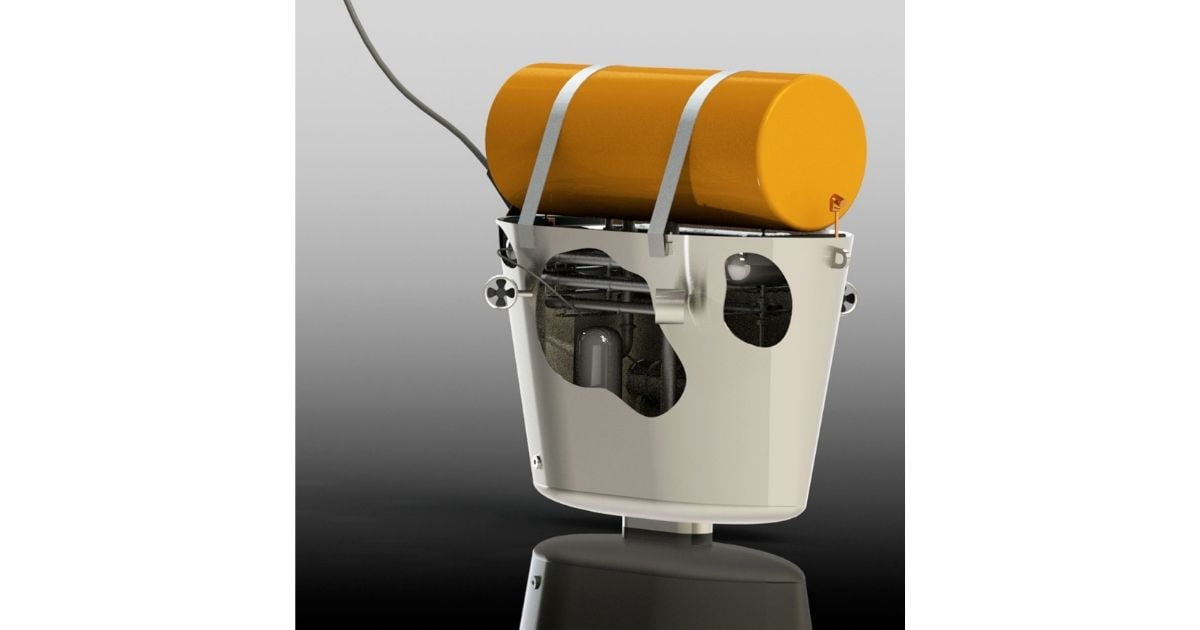
Patents cover equipment, processes, and methods that address the cost and complexities of producing fresh water from deep ocean water (DOW). Operation within this environment avoids the intake of plankton and other biomass, reducing the concentration of brine to eliminate its accumulation and lower energy cost. The technology addresses the lifecycle requirements of deployment, installation, and recovery, or removal, from depth, subsea operation, collection, storage, extraction, and purified water delivery to surface or shore. Patents include using ~3% differential in relative density between produced fresh water and ambient saline water as a safe and stable means of buoyancy control—an innovation with applications across multiple offshore sectors, such as lifting equipment or lowering the cost and risk of platform decommissioning.
The C+E=DOW Desalination System is contained within a submersible vessel to immerse in a body of water at depths where naturally occurring hydrostatic pressure forces seawater through reverse osmosis filters to lower energy costs by 40% compared to coastal desalination. Operation below the ocean’s photic zone where 90% of marine life exists eliminates much of the detrimental environmental impact of coastal or seawater desalination drawn from surface waters. Methods facilitate operation above the seafloor, addressing impact to benthic (mud bottom) community and challenges of silting.
The submersible fits in a standard container for ground, air, and ship transport and launches using ramps, lower-cost shore-based cranes, and smaller-tow vessels. Compatibility with this commonly accessible harbor infrastructure facilitates mobility for quick response for emergency or humanitarian needs and intermittent or peak supply for coastal or island communities. Claims include methods of mineralization to deliver potable or water of specified chemistry for medical, commercial, or industrial purposes.
Modules can also be deployed in clusters or arrays and connected to offshore or inshore infrastructure for power with pipelines to transport purified water to shore for industrial-scale production. Each Module scales to produce between 250 – 1000 gallons per minute—more than one million gallons per day of purified water from seawater.
According to Tim Foresman, Ph.D., Former Chief Scientist for the United Nations Environment Program, who participated in reverse osmosis systems development with the U.S. Naval Civil Engineering Laboratory (NCEL),
“The brilliance of C+E’s work is to effectively integrate an engineered solution that advances the state-of-the-art for comprehensive management of coastal resources while generating renewable potable water sources. Their technology offers a solution not only for energy savings but targets the core need for a new sustainable paradigm within the seawater desalination industry. This is a solution with special emphasis on its impact on ocean life and ocean systems, and their relationship to climate change.”